EN
EN
Major Service
What are you looking for?

When it comes to manufacturing highly detailed and accurate prototypes, two techniques stand out prominently: vacuum casting and vacuum forming. At Xin Pin, a leading vacuum casting factory in the heart of China, we specialize in delivering top-notch prototype solutions that embody precision, quality, and efficiency. With the expertise garnered from years of immersion in China prototype manufacturing, we aim to shed light on the differences, benefits, and applications of vacuum casting and vacuum forming.
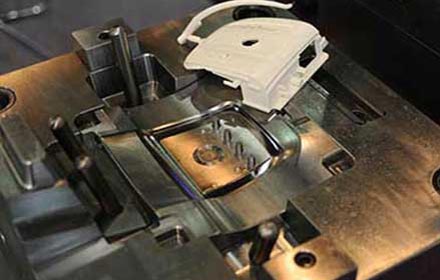
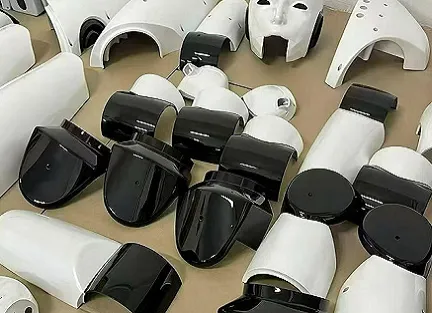
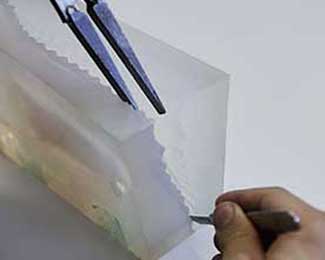
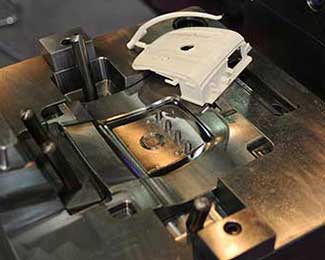
Vacuum casting, often referred to as urethane casting, is a process where a master model (usually 3D printed or machined) is used to create a silicone mold, into which liquid material (like polyurethane) is poured and cured under vacuum. This technique is highly regarded for its ability to reproduce fine details, textures, and complex geometries with remarkable accuracy.
High Accuracy: Vacuum casting excels in creating prototypes that are extremely close to the original design. The silicone mold captures intricate details from the master model, making it ideal for parts that require high precision.
Material Versatility: A wide range of materials with different properties (rigid, elastomeric, transparent, etc.) can be used, allowing manufacturers to mimic production-quality plastics.
Quick Turnaround: For small to medium runs, vacuum casting offers a relatively fast production cycle, making it suitable for market testing and functional testing before mass production.
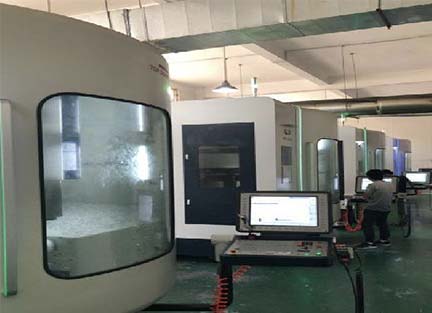
At Xin Pin, our advanced vacuum casting China is equipped with state-of-the-art technology, ensuring that every prototype we produce meets the highest standards of quality.
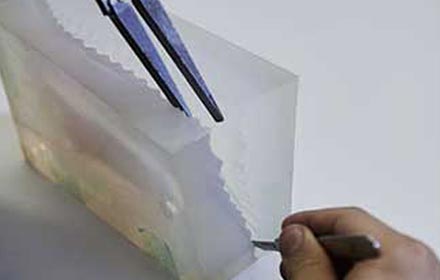
Vacuum forming is a simpler and more cost-effective process used mainly for creating larger plastic components. In vacuum forming, a sheet of plastic is heated until pliable, then stretched over a mold and suctioned into shape by a vacuum. While it’s excellent for producing large parts quickly and economically, it may not offer the same level of detail and complexity as vacuum casting.
Cost Efficiency: Vacuum forming is typically more economical, particularly for large-scale production of large parts. The equipment and mold costs are lower compared to vacuum casting.
Speed: This method is faster for producing bigger parts in large quantities. It's well-suited for industries like automotive, packaging, and signage.
Simplicity: The process is straightforward, which translates to reduced lead times and easier adjustments in the design phase.
However, the trade-off comes in terms of detail and complexity, which is where vacuum casting has an edge.
Both vacuum casting and vacuum forming have their unique strengths and are applicable in different scenarios. Understanding their key differences helps in selecting the right process based on the project requirements.
Precision and Detail
Vacuum casting is unparalleled in achieving high-precision prototypes. The ability to capture minute details makes it ideal for small, intricate parts required in sectors like medical devices, consumer electronics, and aerospace. In contrast, while vacuum forming is efficient for larger parts, it cannot replicate the same level of fine detail.
Material Options
The versatility of materials in vacuum casting is a significant advantage. It allows manufacturers to prototype using materials that closely match the final production materials. This material flexibility is crucial for functional and aesthetic testing. Vacuum forming, on the other hand, is generally limited to thermoplastics, which can restrict its application in certain industries.
Production Volume
For low to medium volume production, vacuum casting is the preferred option due to its ability to produce high-quality prototypes efficiently. However, for productions requiring hundreds to thousands of units, vacuum forming offers a more cost-effective solution due to lower per-unit costs and faster production times.
In the realm of prototype manufacturing, choosing the right technique is pivotal to achieving desired results. At Xin Pin, a premier vacuum casting factory in China, we commit to delivering prototypes that not only meet but exceed client expectations. With our profound expertise in vacuum casting and a comprehensive understanding of China prototype manufacturing, we are well-equipped to guide you in selecting the best process for your project.
Whether you need highly intricate and detailed parts or cost-effective large-scale production, Xin Pin is dedicated to offering superior solutions tailored to your unique needs. Reach out to us to discover how our seamless and efficient vacuum casting services can bring your vision to life with unmatched quality and precision.