EN
EN
Major Service
What are you looking for?


In the fast-paced world of manufacturing, choosing the right production technique can make or break a project. From prototyping to full-scale production, companies are continuously looking for efficient, cost-effective, and high-quality methods to get their products to market. Among the many methods available, vacuum casting and injection molding are two prominent techniques that manufacturers often consider. In this blog, we will explore these methods in depth, especially in the context of services offered by top-tier Chinese prototype manufacturers like Xin Pin.
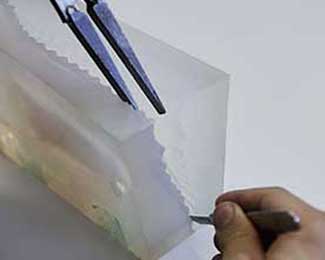
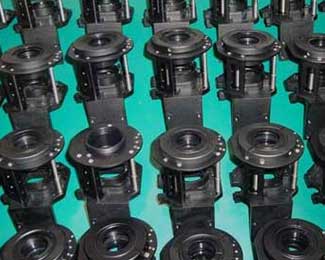
Vacuum casting is a highly versatile and precise manufacturing technique used to create plastic and rubber parts. The process involves creating a master model, which is typically produced using a CNC machine or 3D printing. This master model is then used to create a silicone mold. The silicone mold is filled with the desired material under a vacuum to ensure that no air bubbles are trapped, thus guaranteeing the structural integrity of the cast part. The versatility of this method makes it ideal for small to medium production runs, prototypes, and parts with intricate designs.
With economic scalability and cutting-edge technology, China has become a hub for vacuum casting factories. Companies like Xin Pin offer world-class vacuum casting services that are both cost-effective and high-quality. Chinese prototype manufacturers have access to advanced machinery and skilled labor, making them a smart choice for companies needing rapid, reliable, and precise parts.
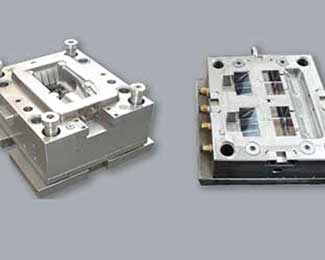
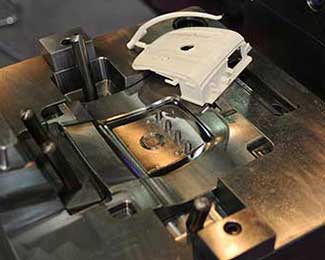
Unlike vacuum casting, injection molding is a manufacturing process capable of producing high volumes of parts. This method involves injecting molten material into a metal mold under high pressure. Once the material cools and solidifies, the finished part is ejected from the mold. Injection molding is incredibly efficient, especially for large-scale production, and offers high repeatability and excellent mechanical properties.
China rapid injection molding services offered by companies like Xin Pin can drastically reduce production times and costs. Advanced technology, expert craftsmanship, and comprehensive quality control systems make Chinese manufacturers a logical choice for businesses looking to maintain high standards without breaking the bank. Additionally, Chinese prototype manufacturers are adept at producing both complex and straightforward parts swiftly and accurately.
Cost and Volume
When deciding between vacuum casting and injection molding, the volume of production and associated costs are crucial factors. Vacuum casting is more suited for low to medium volume production and prototyping due to the lower initial costs and quicker turnaround times. The cost-effectiveness diminishes as production volumes increase because the silicone molds used in vacuum casting have a limited lifespan.
On the other hand, while the initial costs for injection molding are higher due to the creation of metal molds, it becomes more cost-effective for high-volume production. The durability and longevity of metal molds mean that they can be used to produce millions of parts before needing replacement, making injection molding the more economical choice for large-scale manufacturing.
Material Versatility and Part Complexity
Vacuum casting offers exceptional material versatility and is adept at producing parts with intricate designs and complex geometries. The process allows for a wide range of material choices, including various types of plastics and rubber, and can replicate the master model with high accuracy. This is particularly useful for creating detailed prototypes and functional parts that require precise tolerances.
Injection molding also provides a wide array of material options but excels in the production of high-strength, durable parts. Though it can handle complex designs, the method is better suited for parts that do not require significant changes between runs.
Lead Times and Scalability
If speed is a critical concern, China rapid injection molding wins hands down for large-scale production. With streamlined processes and advanced technology, companies like Xin Pin can produce high volumes of parts in a very short time frame.
Vacuum casting, however, is faster for producing initial prototypes and smaller batches. The lead times are generally shorter for the first few parts, making it ideal for market testing and iterative product development.
Conclusion
Choosing between vacuum casting and injection molding ultimately comes down to the specific requirements of your project. For low to medium volume production and high-detail prototypes, vacuum casting is an excellent choice. Companies looking to scale production efficiently, however, will find injection molding to be more advantageous.
Chinese prototype manufacturers like Xin Pin offer a range of services in both vacuum casting and rapid injection molding, providing the flexibility and expertise needed to bring innovative products to life. When working with a Chinese vacuum casting factory or leveraging China rapid injection molding services, you can expect high-quality, efficient, and cost-effective solutions tailored to meet your manufacturing needs.