EN
EN
Major Service
What are you looking for?

In the evolving landscape of manufacturing, two key technologies stand out: vacuum casting and 3D printing. While both offer unique advantages, the choice between them often depends on specific project requirements, budget constraints, and desired outcomes. As a leading brand in the field, Xin Pin provides both vacuum casting and 3D printing parts in China. This comprehensive guide compares these two techniques, helping you make an informed decision for your next project.
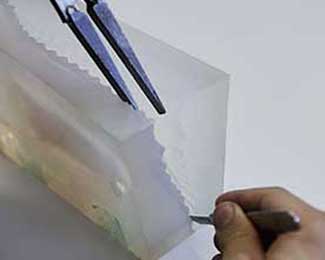
Vacuum casting is a well-established manufacturing process typically used for producing high-quality prototypes. This technique involves creating silicone molds from a master model and subsequently pouring liquid polyurethane or other casting materials into these molds under vacuum.
Master Model Creation: The method starts with the creation of a master model, usually made using CNC machining or 3D printing.
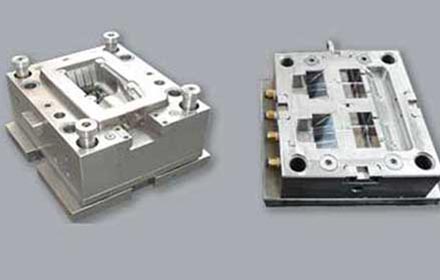
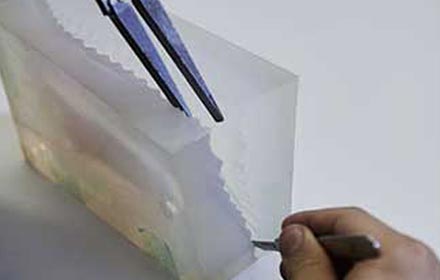
Silicone Molding: The master model is then encased in silicone to create a mold.
Vacuum Process: Polyurethane or other casting materials are poured into the mold under vacuum to eliminate air bubbles and ensure precision.
Curing: The mold is then cured to harden the material, forming the final part.
High-Quality Finishes: Vacuum casting delivers parts with excellent surface finish and high precision.
Material Versatility: A wide range of materials can be used, including rubber-like materials, transparent plastics, and more.
Cost-Effective for Medium Runs: Ideal for prototypes and low to medium-volume production.
With Xin Pin's expertise in offering vacuum casting China, clients benefit from rapid turnaround times and high-quality outputs.
3D printing, or additive manufacturing, is a more recent but revolutionary method. It involves creating parts layer by layer from a digital model. With advancements in technology, Xin Pin offers 3D printing parts China, catering to both prototyping and production needs on a wholesale scale.
1. Digital Design: The process starts with a digital 3D model, often designed using CAD software.
2. Printing: The model is then printed layer by layer, using materials like plastic, resin, metal, or composite.
3. Post-Processing: After printing, the part may require additional processing like polishing, painting, or assembly.
Design Flexibility: Complex geometries that would be impossible or very difficult to achieve with traditional methods can easily be produced.
Speed: Rapid prototyping capabilities allow for quick iteration and testing.
Cost-Effective for Low Runs: Ideal for small batch production and custom parts.
Given the growing demand for 3D printing wholesale services, Xin Pin has positioned itself as one of the leading Chinese prototype manufacturers, offering an extensive range of materials and technologies.
Choosing between vacuum casting and 3D printing depends on various factors like the complexity of the design, required material properties, production volume, and budget.
Design & Complexity:
Complex Geometries: 3D printing excels in creating intricate and highly detailed components, making it the go-to for complex designs.
High-Quality Finishes: For parts that require a superior surface finish and high aesthetic appeal, vacuum casting is often preferred.
Material Properties:
Material Diversity: Vacuum casting offers a broader range of material options suitable for various applications.
Functional Prototypes: While 3D printing is advancing in material capabilities, vacuum casting can produce more functional prototypes using specialized casting resins.
Production Volume:
Low to Medium Volume: Vacuum casting is generally more cost-effective for producing between 10 to 100 units.
Low Volume & Customization: 3D printing is ideal for low-volume production, especially for custom or highly personalized parts.
Cost Considerations:
Initial Investment: The upfront costs for creating a master model and silicone molds in vacuum casting may be higher than the initial cost of 3D printing a model.
Economies of Scale: For larger production runs, the per-unit cost in vacuum casting drops significantly, making it more economical than 3D printing.
Conclusion
Both vacuum casting and 3D printing are powerful manufacturing technologies, each with unique strengths. By understanding the differences and advantages of each, you can make a more informed decision. Whether you need high-quality prototypes through vacuum casting in China or innovative designs with 3D printing parts in China, Xin Pin is your trusted partner. Catering to the needs of various industries, we offer unparalleled expertise and quality as one of the leading Chinese prototype manufacturers.